
Quick Take
MIT’s new Project Iceberg says today’s AI could technically perform work equal to 11.7% of U.S. wages (~$1.2T), mostly in administrative, financial and professional services roles, with about 16% of tasks already within AI capability. In reality, this is about exposure, not a hiring vs firing forecast. However, it moves the “AI will change jobs someday” focus to a skills-level map that shows where firing pressure will show up first. For CIOs of large enterprises and public-sector organizations, this headline is more about one important question: Are you systematically mapping skills to AI capabilities, or are you flying blind while your competitors (and regulators) now have a benchmark?
How Did We Get Here?
Since 2023, multiple studies have declared that “big” numbers of workers will be displaced by AI. OpenAI and its partners reported that most workers have at least 10% of tasks exposed to LLMs. Goldman Sachs estimated that up to 300M jobs globally are at risk. The IMF flagged approximately 60% of advanced-economy jobs as AI-impacted.
Enterprise AI deployments in the form of copilots, AI assistants, and workflow automation have moved from pilots to production in finance, tech, and services industry sectors, Goldman Sachs being a high profile financial industry example. In spite of these developments and reported AI exposure numbers, there has been no creation of a skills-based map of what is actually automatable today and that is what the development of the Iceberg Index is about.
How Much Should You Care?
Our analysis using the Tactive Action Index, Figure 1, scores this development as 3.3 (out of 5). We suggest that CIOs should do more research and delve deeper into this development. You should start thinking about creating your own skills-level exposure map for your company. MIT's Iceberg Index says that with today’s AI tools, just over a tenth of U.S. wage value, especially in white-collar, process-driven work, could be automated at an acceptable cost. That’s a direct pointer to where your own organization’s cost base and talent model will feel pressure first, and a strong signal that doing nothing is, in itself, a strategic decision.
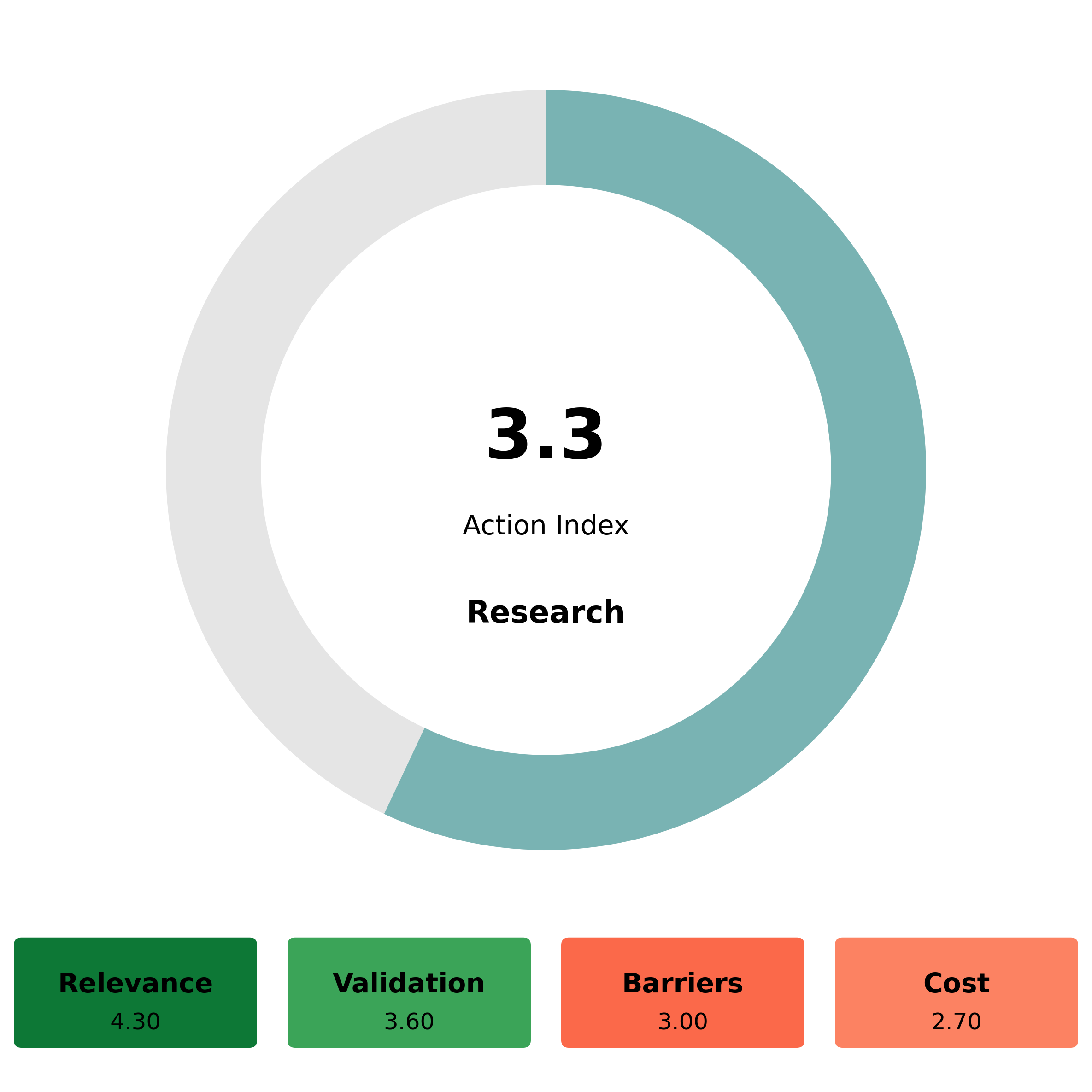 Figure 1. AI Jobs Action Index
Key Takeaway
Use MIT’s Iceberg Index as a strategic signal that it is time to investigate how to start systematically testing AI against your highest-cost cognitive work and identifying automatable skills as AI replacement candidates.